Goeva Lab
Themes
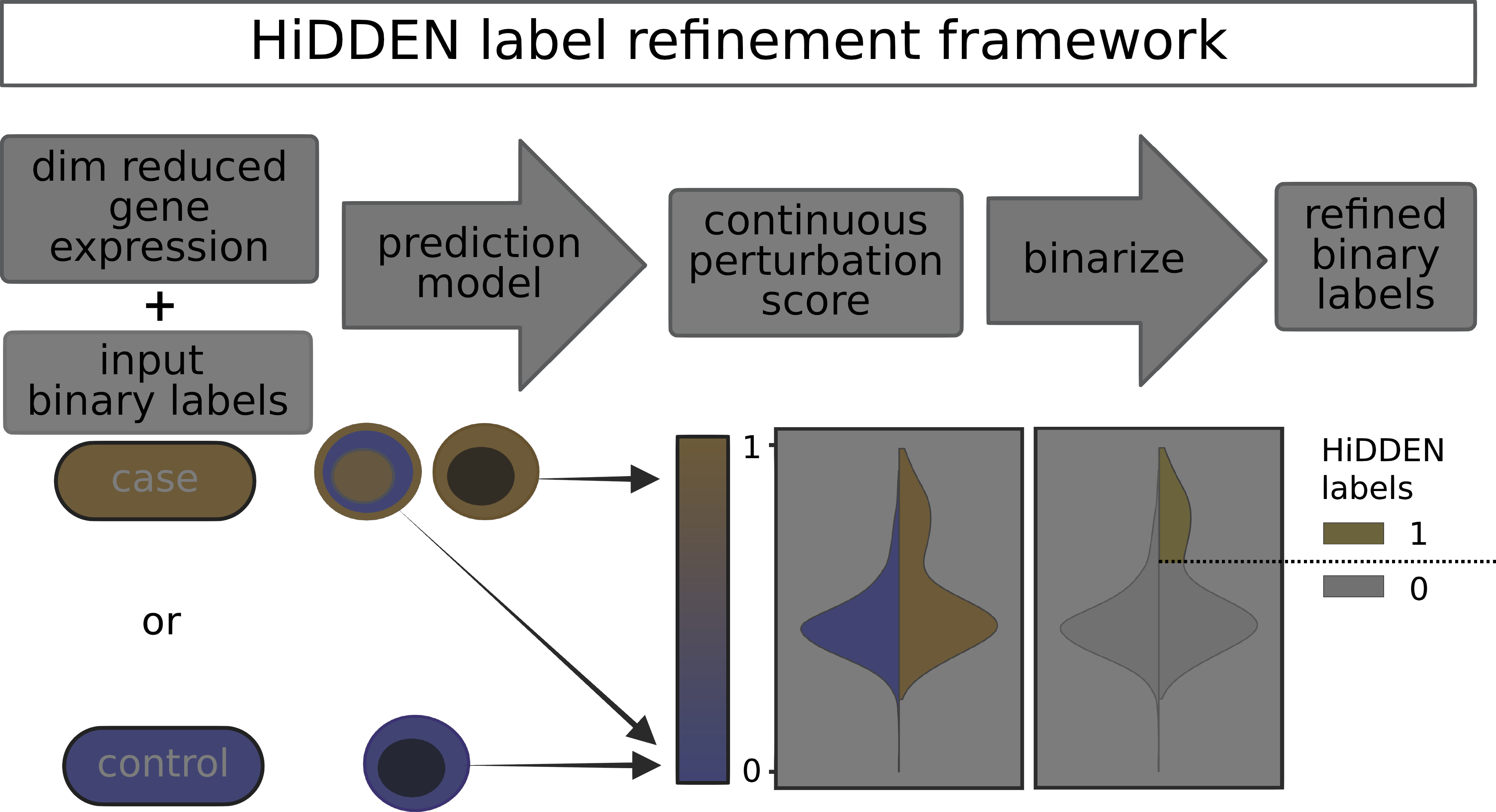
Detecting subtle and heterogeneous biological signals
Many disease-relevant effects are present only in subsets of cells or are masked by dominant sources of variation, making them difficult to detect with standard approaches. We develop statistical and machine learning methods to identify weak, sparse, and heterogeneous signals in high-dimensional biological data.
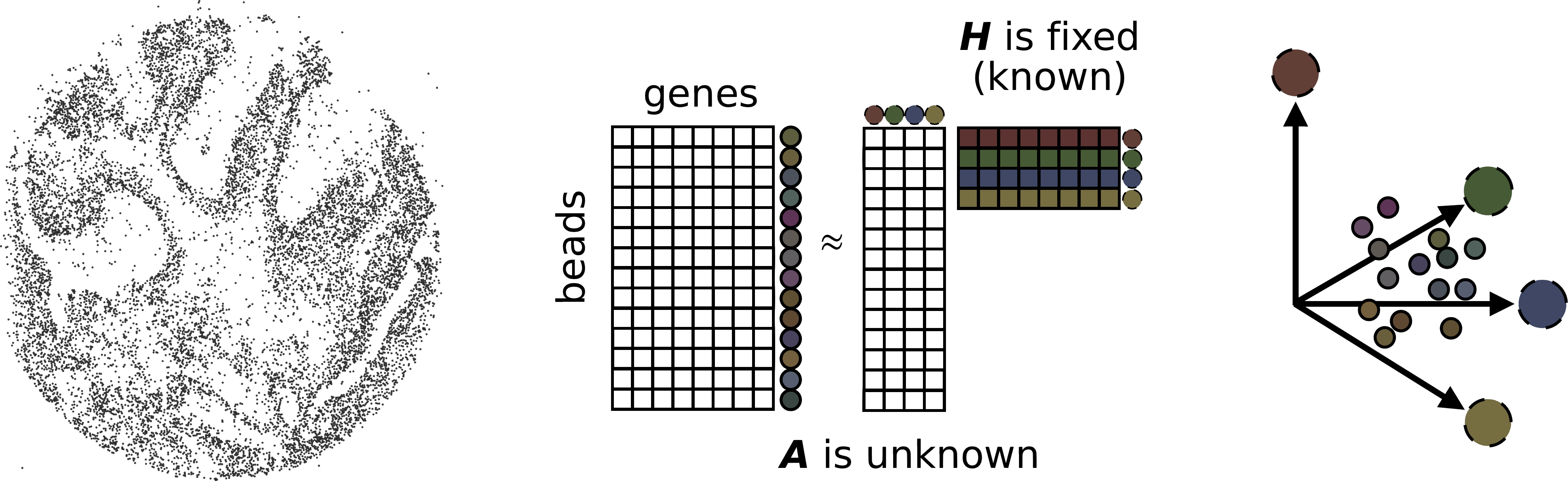
Interpretable models for single-cell and spatial genomics
We design interpretable computational frameworks that integrate prior biological knowledge with machine learning to model cellular identity, state, and spatial organization. A central goal is to produce models whose outputs can be directly linked to biological mechanisms and validated experimentally.
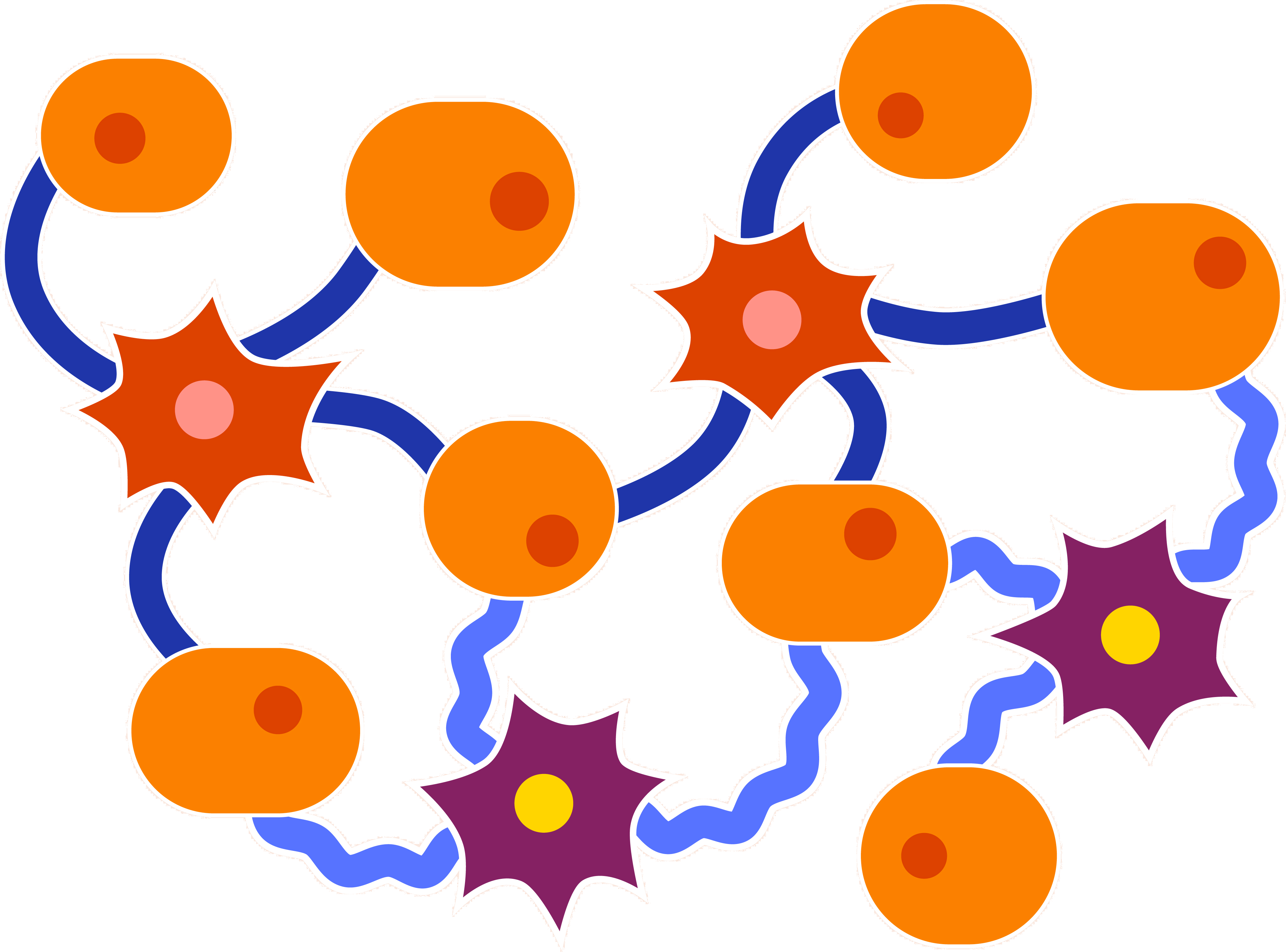
Modeling cellular interactions and tissue organization
We develop methods to understand how cells interact within tissues, including frameworks for studying cell–cell communication and the emergence of coordinated behavior across cell populations. We are particularly interested in moving beyond cell-centric views toward modeling interactions as fundamental units of biological systems.
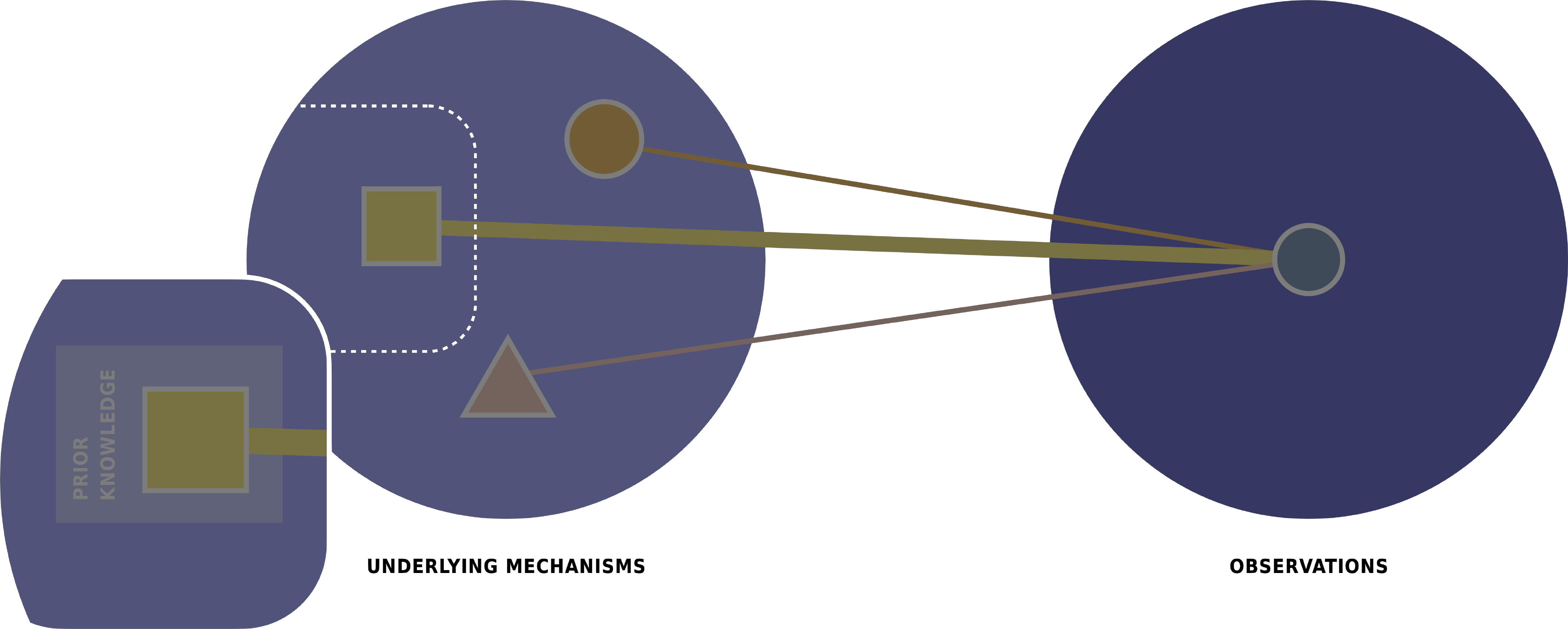
Statistical frameworks for robust biological discovery
We study how data structure, noise, and experimental design shape what can be reliably detected in biological systems. Our work emphasizes uncertainty, identifiability, and detectability, with the goal of improving the reliability and reproducibility of discoveries in modern genomics.
Source availability
Source code for all lab projects (including this website) is hosted on GitHub, under the goeva-lab organization!
Selected Work
For a complete list of published works, please see Dr. Goeva’s Google Scholar.
Preprints
- 1. Afanasiev, E., and Goeva, A. (2026). found: Inferring cell-level perturbation from structured label noise in single-cell data. https://doi.org/10.64898/2026.04.10.717768.
Peer-reviewed Publications
- 1. Campbell, K.R., and Goeva, A. (2025). Cells Keep Diverse Company in Diseased Tissues. Cancer Research 85, 2351–2352. https://doi.org/10.1158/0008-5472.can-25-2070.
- 2. Goeva, A., Dolan, M.-J., Luu, J., Garcia, E., Boiarsky, R., Gupta, R.M., and Macosko, E. (2024). HiDDEN: a machine learning method for detection of disease-relevant populations in case-control single-cell transcriptomics data. Nature Communications 15. https://doi.org/10.1038/s41467-024-53666-8.
- 3. Yang, A., Chidiac, R., Russo, E., Steenland, H., Pauli, Q., Bonin, R., Blazer, L.L., Adams, J.J., Sidhu, S.S., Goeva, A., et al. (2024). Exploiting spatiotemporal regulation of FZD5 during neural patterning for efficient ventral midbrain specification. Development 151. https://doi.org/10.1242/dev.202545.
- 4. Dolan, M.-J., Therrien, M., Jereb, S., Kamath, T., Gazestani, V., Atkeson, T., Marsh, S.E., Goeva, A., Lojek, N.M., Murphy, S., et al. (2023). Exposure of iPSC-derived human microglia to brain substrates enables the generation and manipulation of diverse transcriptional states in vitro. Nature Immunology 24, 1382–1390. https://doi.org/10.1038/s41590-023-01558-2.
- 5. Adler, M., Moriel, N., Goeva, A., Avraham-Davidi, I., Mages, S., Adams, T.S., Kaminski, N., Macosko, E.Z., Regev, A., Medzhitov, R., et al. (2023). Emergence of division of labor in tissues through cell interactions and spatial cues. Cell Reports 42, 112412. https://doi.org/10.1016/j.celrep.2023.112412.
- 6. Cable, D.M., Murray, E., Zou, L.S., Goeva, A., Macosko, E.Z., Chen, F., and Irizarry, R.A. (2021). Robust decomposition of cell type mixtures in spatial transcriptomics. Nature Biotechnology 40, 517–526. https://doi.org/10.1038/s41587-021-00830-w.
- 7. Goeva, A., Stoudt, S., and Trisovic, A. (2020). Toward Reproducible and Extensible Research: from Values to Action. Harvard Data Science Review 2. https://doi.org/10.1162/99608f92.1cc3d72a.
- 8. Goeva, A., Lam, H., Qian, H., and Zhang, B. (2019). Optimization-Based Calibration of Simulation Input Models. Operations Research, 1362–1382. https://doi.org/10.1287/opre.2018.1801.
- 9. Kramer, J., Helfrich, C., Schwartz, A., Samuel, P., Kolaczyk, E., and Goeva, A. (2019). Outcomes of an Environmental-Focused, Problem-Solving Intervention for Transition-Age Youth: Project TEAM. American Journal of Occupational Therapy 73, 7311515321p1. https://doi.org/10.5014/ajot.2019.73s1-rp101c.
- 10. Rodriques, S.G., Stickels, R.R., Goeva, A., Martin, C.A., Murray, E., Vanderburg, C.R., Welch, J., Chen, L.M., Chen, F., and Macosko, E.Z. (2019). Slide-seq: A scalable technology for measuring genome-wide expression at high spatial resolution. Science 363, 1463–1467. https://doi.org/10.1126/science.aaw1219.
- 11. Saunders, A., Macosko, E.Z., Wysoker, A., Goldman, M., Krienen, F.M., Rivera, H. de, Bien, E., Baum, M., Bortolin, L., Wang, S., et al. (2018). Molecular Diversity and Specializations among the Cells of the Adult Mouse Brain. Cell 174, 1015–1030.e16. https://doi.org/10.1016/j.cell.2018.07.028.
- 12. Kunin, D., Bloom, J., Goeva, A., and Seed, C. (2019). Loss Landscapes of Regularized Linear Autoencoders. In Proceedings of the 36th International Conference on Machine Learning Proceedings of Machine Learning Research., K. Chaudhuri and R. Salakhutdinov, eds. (PMLR), pp. 3560–3569.
- 13. Kramer, J.M., Helfrich, C., Levin, M., Hwang, I., Samuel, P.S., Carrellas, A., Schwartz, A.E., Goeva, A., and Kolaczyk, E.D. (2018). Initial evaluation of the effects of an environmental‐focused problem‐solving intervention for transition‐age young people with developmental disabilities: Project TEAM. Developmental Medicine & Child Neurology 60, 801–809. https://doi.org/10.1111/dmcn.13715.
- 14. Goeva, A., Lam, H., and Zhang, B. (2014). Reconstructing input models via simulation optimization. In Proceedings of the Winter Simulation Conference 2014 (IEEE), pp. 698–709. https://doi.org/10.1109/wsc.2014.7019933.
Invited Discussions, Commentaries, and Explainers
- 1. Blumenthal, K., Goeva, A., Stoudt, S., and Trisovic, A. (2021). Why Do We Plot Data?. Harvard Data Science Review.
- 2. Frost, S., Goeva, A., Seaton, W., Stoudt, S., and Trisovic, A. (2020). Early-Career View on Data Science Challenges: Responsibility, Rigor, and Accessibility. Harvard Data Science Review. https://doi.org/10.1162/99608f92.b211611a.
- 3. Frost, S., Goeva, A., Pombra, J., Seaton, W., Stoudt, S., Trisovic, A., Wang, C., and Zucker, C. (2021). Kaleidoscopic Perspectives on Practicum-Based Data Science Education. Harvard Data Science Review. https://doi.org/10.1162/99608f92.ba6336bc.
- 4. Goeva, A., and Kolaczyk, E.D. (2016). Comment. Journal of the American Statistical Association 111, 1405–1408. https://doi.org/10.1080/01621459.2016.1245072.
- 5. Goeva, A., Jones, P., Stoudt, S., and Trisovic, A. (2021). Recipes for Connector Courses From the Early-Career Board Kitchen. Harvard Data Science Review. https://doi.org/10.1162/99608f92.f7c60746.
- 6. Goeva, A., and Stoudt, S. (2021). COVID-19 Case Fatality Rate Bias Visual Explainer. Harvard Data Science Review.